By: Hasmeyya L. Tiboron
I am a Muslim and the concept of Gentle Parenting is Not New to Me. I’ve always heard about it at school as a child, but seeing how children were treated in our culture confused me.
Gentle parenting has become a buzzword on social media by parenting influencers and child development experts. This parenting style encourages parents to consider the child’s perspective and validate their needs and emotions while maintaining firm boundaries. There is no specific definition of gentle parenting, however, the notion originated with Magda Gerber, who promoted respect for infants and young children and was later popularized by author Sarah Ockwell-Smith in most of her written works. Although this approach attracts many modern parents today, this concept is not new to me.
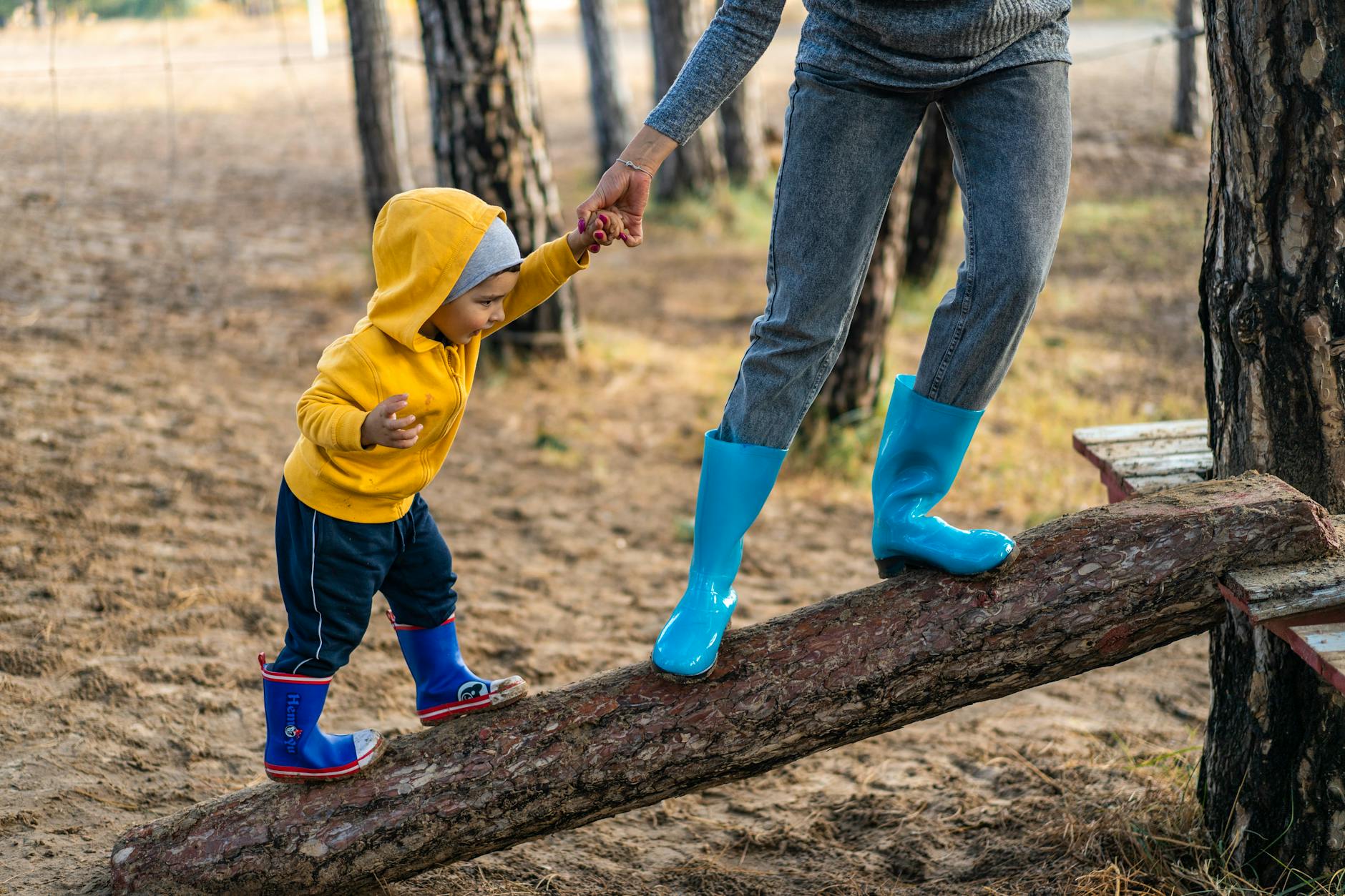
Researchers discovered that until the age of seven, young children cannot distinguish between right and wrong; instead, they mirror the behaviors they see around them. This is why gentleness is crucial at their developing stage as it establishes the foundation for how they interact with the world later in life. Islam advocated this same idea 1400 years ago. In Islam, strict rules should only start when the child reaches the age of seven; until then, adults should bond with them through play, love, and care. I heard this a lot in school, too. But witnessing how children are treated in the culture I came from confused me.
Fear is not respect. When an adult has earned respect, children will give value to their words, seek out their advice because they trust their insight, and go to great lengths to make them happy. But fear does something similar. It also makes the child do what is said and the line between fear and respect is too thin that some adults think they earned respect simply because it makes them feel big.
I grew up in a Muslim-dominated culture, and it is deeply ingrained in our upbringing that children should pay the utmost respect to their elders. This concept is applied differently from household to household. In healthy households, elders naturally earn the respect of a child by demonstrating respectful behaviors, empathy, and open communication in varying degrees of imperfect attempts. Whereas in other households, the elders instill fear to earn the spectacle of the respect they crave. From childhood to teenage years, they train children not to talk back, to endure their physical, mental, and emotional abuse without question, and to obey orders no matter how unreasonable.
The problem arises when the children grow up into adults and outgrow their fear because, without the fear, there is nothing left that binds them to the adults anymore. Sooner or later, they will come to understand their own capability to live the life they desire and will eventually plan their escape because the semblance of a relationship they thought they had has ceased.
Islam has long prevented this slippery slope by urging parents to establish trusting and loving relationships with their children from an early age. There is no one perfect formula for parenting. Developmental conditions happen, financial situations vary, and other factors all play a significant role in raising a child. But as they say, trying to raise a healthy child is better than fixing a broken adult. Nonetheless, the increasing number of parenting philosophies and theories today only carry the same message that Islam brought down 1400 years ago -that parenting is a serious responsibility. Once again, time has shown that Islam is right, as it always is.
Hasmeyya, 25, is a creative nonfiction writer from Cotabato City. She holds a bachelor’s degree in Philosophy at MSU - Main Campus and is currently pursuing master’s degree in MSU - Maguindanao. She used to work in public service, but for now, she’s living her childhood dream of becoming a stay-at-home mom.
 PHILIPPINE MUSLIM TODAY
Thank you so much for featuring this, Sir Dean.
LikeLike