By Ali G. Macabalang
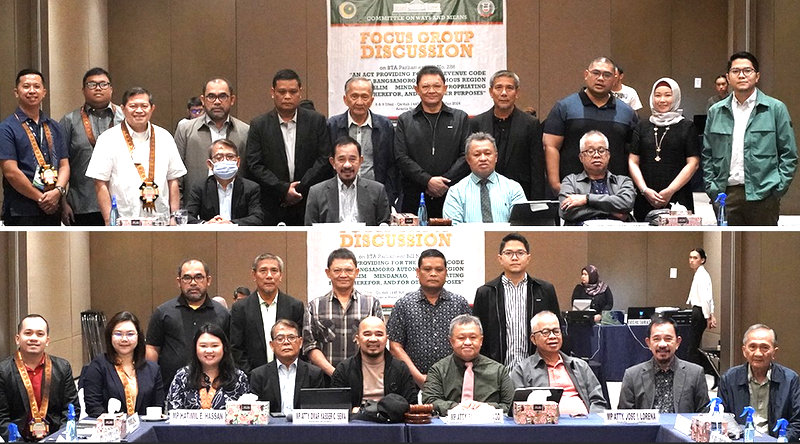
COTABATO CITY – Islamic banking may yet be practiced enormously in the country for the first time, particularly in the Bangsamoro Autonomous Region in Muslim Mindanao (BARMM).
While BARMM stands as the bastion of most of Muslim Filipinos, its private and public entities as well as residents have since time immemorial depended on conventional banking practiced by government and commercial banks operating in the region.
Amid this age-old vacuum, the Bangsamoro Transition Authority (BTA) or BARMM’s interim parliament is pushing for an introduction and application of Islamic banking in the autonomous region under a Revenue Code bill it currently deliberates, Philippine Muslim Today (PMT) news sources said.
The BARMM’s “Government of the Day” authored the proposed edict docketed as BTA Bill 286 for a multi-pronged purpose, according to regional interim parliament Deputy Speaker Paisalin “Popoy” Tago.
Tago, a lawyer and certified public accountant, chairs the BTA Ways and Means Committee (WMC), which has held initial hearings and consultations with finance and legal experts within and outside BARMM.
Initial out-of-town consultations were already staged this month in Cagayan de Oro City in Region 10 and Davao City in Region 11 where the committee brainstormed with invited experts on incorporating Islamic banking into the bill in possible harmony with the existing environment including the commercial banks’ operations.
Member of Parliament (MP) Tago pointed out the need for thorough consultations for the bill, saying the proposed edict will not only introduce Islamic banking but also seek to promote transparency and increase revenue collection in the region through a digitalized system.
According to MP Ubaida Pacasem, a committee member and incumbent BARMM Budget and Finance minister, the proposed code would hopefully standardize Islamic financial contracts and transactions in the region, ensuring their economic equivalence with their conventional counterparts.
Pacasem and Tago were reportedly confident that the enactment of the code could level the playing field for Islamic finance products and services in an atmosphere of open, equitable, and competitive financial system within BARMM.
According to them, the committee received suggestions for institutionalizing hisbah to implement Shariah principle in the BARMM’s economy, taxation based on excess wealth, and incorporating zakat into the revenue code.
BARMM comprises the predominantly Muslim provinces of Lanao del Sur, Maguindanao del Sur, Maguuindanao del Norte, Basilan, Sulu, and Tawi-Tawi, the cities of Cotabato, Marawi and Lamitan as well as the 63-barangay Special Geographical Area (SGA) in North Cotabato now formed into eight municipalities.
It has been established five years ago under the provisions of two major peace deals forged by the government with the Moro Islamic Liberation Front (MILF) in 2013 and 2014 and under R.A. 11054 or known as the Bangsamoro Organic Law (BOL) of 2018.
The committee hearings in Cagayan de Oro and Davao cities were attended by invited experts, including Mindanao State University-Marawi Shari’ah Center Director Anwar Radiamoda; lawyers Saniarah Diangca, Lerca Guipe Valdez,
Leo Artemio Puertos, and Manuel Quibod, a dean of Ateneo de Davao’s College of Law.
Jonathan Susvilla of the BARMM’s Bureau of Local Government Finance joined the invited experts’ discussions in the Davao City hearing. (AGM)
 PHILIPPINE MUSLIM TODAY