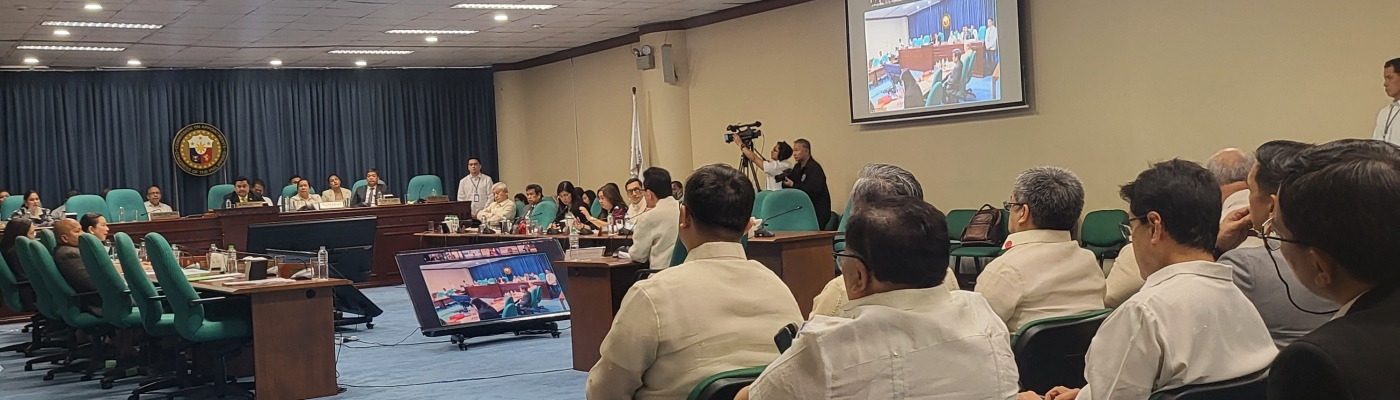
PASAY: Prominent Muslim leaders in the Philippines and Overseas Filipino Workers (OFWs) leaders, including Abdul Hannan M. Tago, President of the Ulama Supreme Council of the Philippines for Peace and Development and Aleem Rhosdee B. Arabia, Chairman of the Cavite Muslim Consultative Council have expressed profound dismay and lodged a formal protest against the recent deliberations by the Commission on Appointments (CA) regarding the appointment of Ambassador Raymond Balatbat as the Philippine Ambassador to Saudi Arabia.
The protest letter was addressed to Hon. Sen. Francis Chiz Escudero, Senate President and Chairman of the Commission on Appointments, and Hon. Sen. Jinggoy Ejercito Estrada, Chairman of the Foreign Affairs Committee. The letter outlines a series of concerns raised by the petitioners, who vehemently opposed the appointment during a session held on August 7, 2024, at the Philippine Senate. Fifteen out of the sixteen DFA nominees were confirmed on the same day, while one was bypassed due to a complaint. However, despite the protest against him by not only Muslim leaders but also a group of 69 OFWs, Ambassador Balatbat was still confirmed.
Among the petitioners is Mr. Saga A. Micawayan, an OFW leader and advocate, who serves as the lead convenor of a coalition of 69 OFW leaders. This coalition had previously addressed their concerns to President Ferdinand “Bongbong” Marcos Jr. on July 1, 2024. Their central belief is that only someone with firsthand experience as an OFW can effectively represent the interests of Filipino workers abroad, particularly in a key post like Saudi Arabia.
The petitioners attended the deliberation to oppose the transfer of Ambassador Balatbat from his current position as Philippine Ambassador to Lebanon, a country currently embroiled in high tensions due to ongoing conflicts with Israel. They underscored the necessity of the ambassador’s presence in Lebanon, given the pressing issues and the critical need for experienced diplomatic oversight during such turbulent times.
The Commission on Appointments had previously confirmed the nomination of career Ambassador Renato P. Villa as the Philippine envoy to Saudi Arabia in May 2023. However, despite this confirmation, the host country, Saudi Arabia, did not grant its approval for Villa’s appointment for a full year, citing undisclosed reasons. The petitioners urged the CA to recognize and understand the underlying issues at play. They expressed concern over the decision to nominate Ambassador Balatbat, who, due to religious restrictions, would not be granted entry into Mecca and Medina, the two holiest cities in Saudi Arabia. This situation, they argue, raises serious questions about the diplomatic maturity and wisdom of the appointment.
The petitioners also highlighted the conduct of two CA members during the deliberation, who they believe compromised the independence of the CA by strongly defending Ambassador Balatbat and persuading others to disregard the objections raised by top Muslim leaders in the country. This one-sided approach, according to the petitioners, jeopardizes the integrity of the CA’s decision-making process.
Furthermore, the letter emphasized that opposition voices were not given the opportunity to present their case during the deliberation. Despite Chairman Jinggoy Ejercito Estrada’s attempts to clarify the presence of one of the opponents, CA member Rep. Luis Raymund “L-Ray” Villafuerte Jr. insisted that the petitioners should not be allowed to speak, effectively undermining the chairman’s authority. In a show of protest, the petitioners chose to leave the session prematurely, denouncing what they saw as a suppression of democratic participation.
The petitioners argue that the exclusion of opposing voices undermines the democratic process and the fairness of the CA’s decision-making. They stressed that the concerns raised involved not just a single individual, but ten Muslim leaders and heads of various organizations, contrary to the CA Secretary’s previous indication that only Datu Camad Ali was involved.
The letter also addressed the broader implications of the issue, drawing a parallel between the Vatican and Saudi Arabia, both of which are home to sacred lands. They pointed out that Saudi Arabia, as the birthplace of Islam, maintains strict protocols against the acceptance of non-Muslim ambassadors, particularly in cities like Mecca and Medina. An attached statement intended for presentation during the CA hearing further elaborated on these concerns.
Moreover, the petitioners underscored the ongoing conflict between Lebanon and Israel, arguing that Ambassador Balatbat’s presence in Lebanon is crucial during this volatile period. His role, they asserted, is vital for closely monitoring and managing the complex diplomatic landscape in the region.
The petitioners also noted that while the final confirmation of ambassadorial appointments lies with the host country, the situation with Saudi Arabia has already shown signs of uncertainty. The administration’s initial nominee in May 2023, Ambassador Renato Villa, was ultimately rejected by Saudi Arabia despite his distinguished career, which casts doubt on the timely and favorable confirmation of Ambassador Balatbat.
The petitioners expressed strong disagreement with the CA’s decision, which they believe was made without proper adherence to its mandate. They pointed out that while the Philippines operates as a secular state, Saudi Arabia is governed by Sharia law as an Islamic state. The petitioners cautioned that resources should not be squandered in a manner similar to the case of Ambassador Villa.
In closing, the petitioners called for a thorough evaluation of the CA’s membership and the CA Secretariat staff to ensure that they maintain a balanced and impartial stance when dealing with opposition or protest. They urged for a more comprehensive and equitable deliberation process in future proceedings to prevent jeopardizing the welfare of Overseas Filipino Workers (OFWs) in Lebanon and other parts of the Middle East. (PR)
 PHILIPPINE MUSLIM TODAY